
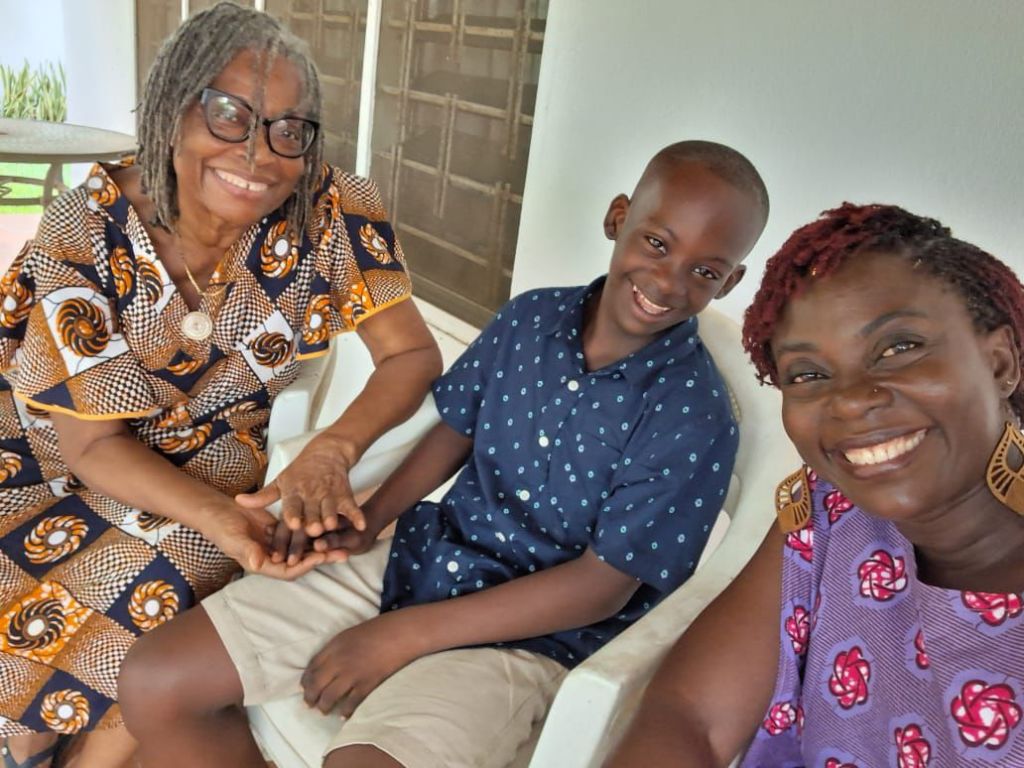
My son has never needed pity. He has only ever needed opportunity.
This past week, world leaders, policymakers, and disability advocates concluded COSP19, the 19th Conference of States Parties to the CRPD, held at United Nations Headquarters in New York from 9 to 11 June 2026, under the theme: “CRPD at 20: Celebrating and consolidating achievements and shaping the next phase of implementation in a changing world.”
Ghana was in that room. Our Minister for Gender, Children and Social Protection, Dr. Agnes Naa Momo Lartey, addressed the General Assembly, affirming Ghana’s commitment to disability rights two decades on. As those conversations now conclude and delegates return home, this is my reflection on the CRPD as a Ghanaian mother.
Twenty years ago, the world took a historic step
On 13 December 2006, the United Nations adopted the Convention on the Rights of Persons with Disabilities, the CRPD, signaling a fundamental shift in how disability would be understood globally. For the first time, disability was no longer framed primarily as a medical condition or a matter of charity. It was recognized as a matter of human rights. The message was simple, yet revolutionary: persons with disabilities are entitled to the same rights, freedoms, dignity, and opportunities as everyone else.
Twenty years later, the question remains: how far have we come?
As a Ghanaian mother raising a son with a disability, this anniversary is more than a policy milestone. It is deeply personal. It is a moment to celebrate progress, acknowledge persistent barriers, and ask honestly whether the promises of the CRPD have translated into meaningful change, not just in policy documents, but in the lives of real people. People like my son.
What the CRPD Actually Says
The CRPD is an international human rights treaty that covers virtually every aspect of life; education, healthcare, employment, accessibility, independent living, political participation, protection from discrimination, and access to justice. At its heart is a powerful principle: disability does not diminish human rights.
But the CRPD goes further than declaring rights. It challenges societies to remove barriers, not fix people. It recognizes that many of the difficulties faced by persons with disabilities arise not from their impairments, but from inaccessible environments, exclusionary systems, and entrenched societal attitudes. This was, and still is, a radical idea. The Convention challenged governments to stop asking “How do we care for persons with disabilities?” and start asking “How do we ensure they enjoy the same rights and opportunities as everyone else?” That shift in question changes everything.
Twenty Years On: What Has Changed?
Globally, the CRPD has had a significant impact. It has influenced legislation, shaped national disability policies, promoted inclusive education, and amplified the voices of persons with disabilities in public life. Most importantly, it has helped shift conversations from charity to rights, from pity to participation. The principle of “Nothing About Us Without Us” has become central to disability advocacy worldwide. Persons with disabilities are increasingly part of conversations that affect their lives, rather than being spoken for by others.
In Ghana, there is real progress worth naming.
Ghana enacted the Persons with Disability Act (Act 715) in 2006 and ratified the CRPD in 2012. Since then, disability organizations have grown stronger. Inclusive education policies have been introduced. Social protection programs like the Livelihood Empowerment Against Poverty (LEAP) under the Ministry of Gender and Social Protection have extended support to some vulnerable households. And perhaps most visibly, persons with disabilities are increasingly present in leadership, advocacy, education, sports, and public life.
These gains matter. They represent years of advocacy, persistence, and courage by persons with disabilities, their families, and allies who refused to accept exclusion as inevitable.
Yet the Promise Remains Incomplete
I will be honest with you, because this blog has never been a space for comfortable half-truths. For many Ghanaian families living with disability, the daily reality is still one of negotiating barriers that should no longer exist.
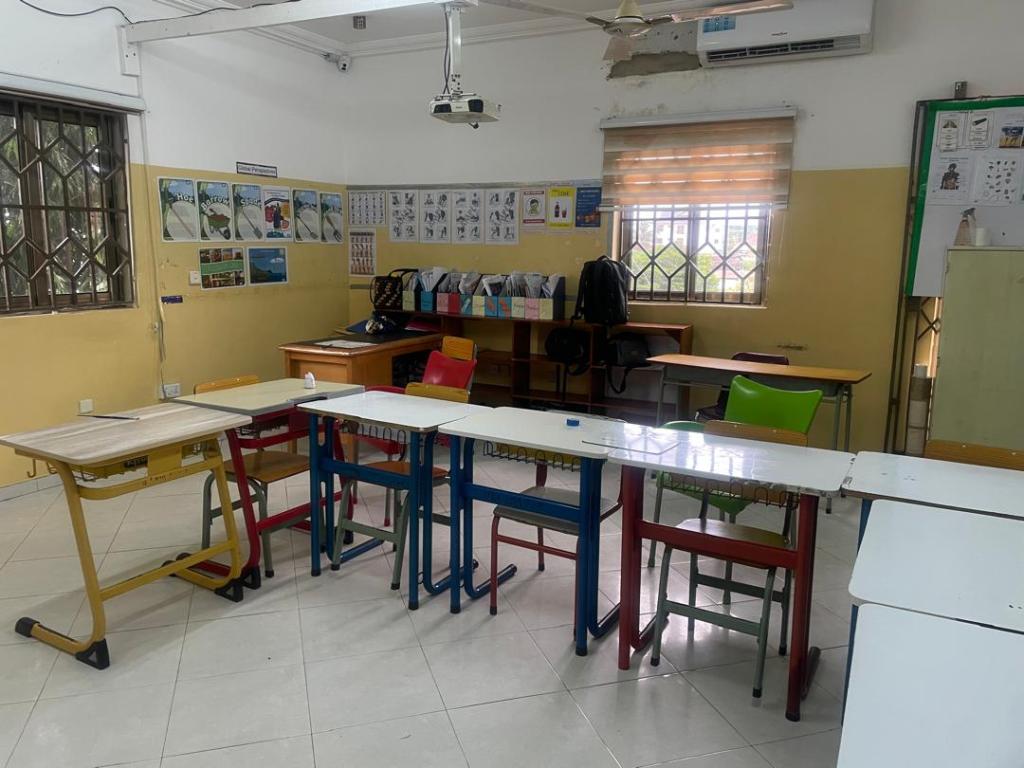
Accessible infrastructure remains inconsistent – many public buildings, health facilities, schools, and transport systems are still difficult or impossible for some persons with disabilities to use. Employment discrimination persists. Inclusive education remains uneven, particularly outside major cities, where teachers often lack adequate training and resources to support diverse learning needs. Disability-disaggregated data, the kind that makes meaningful planning and accountability possible, is still scarce. A real example is when we were getting the National Identification Card for my KEY. There was a section on the form on disabilities and after reading the options, I told the officer there no option that adequately names his particular disability. He told me ‘please pick any’, how can we have accurate data on disability when they are not appropriately named and enumerated?
We have the laws. We just need the will.
And then there is the gap I find most frustrating: the distance between what is written and what is lived. Ghana’s commitment to disability rights is very visible on paper. But enforcement remains inconsistent, and many advocacy groups continue to call for stronger implementation mechanisms and legal reforms that fully align with the CRPD’s standards.
I know this gap intimately. Not as a policy analyst but as a mother.
A right to education means little if a child cannot access the classroom. A right to healthcare means little if communication barriers prevent meaningful care. A right to participation means little if decisions are made without the voices of persons with disabilities at the table. We have the laws. We need the will.
What Twenty Years Have Taught Me
The CRPD has given families like mine a language.
It has given us a framework to advocate, to challenge exclusion, and to insist, firmly, persistently, on dignity. Before this treaty existed, many families had no legal or moral vocabulary for what they were fighting for. Now we do. And today in Ghana, there are many parent-led disability advocacy, awareness creation and service provision organizations because we know what should be and we want to contribute to the solution.
But rights become meaningful only when they are experienced.
My son is (almost) thirteen years old. He has grown up in a Ghana that, on paper, is committed to his rights. And in many ways, I have watched those rights slowly, imperfectly, take shape in his life. I have seen more parents speaking up. More self-advocates claiming their space. More professionals genuinely embracing inclusion. More communities beginning to understand that disability is not inability or a curse (we still have a long way to go in changing the perception on the latter).
That is not nothing. But it is still not enough.
The Next Twenty Years: From Commitment to Action
If Ghana is to fully realize the vision of the CRPD, several priorities deserve urgent attention:
– Strengthen enforcement of disability legislation and accessibility standards
– Complete legal reforms to fully align national laws with the CRPD
– Invest in inclusive education from early childhood through tertiary levels
– Improve disability-disaggregated data collection and reporting
– Expand employment opportunities and workplace accommodations
– Ensure meaningful participation of persons with disabilities in every policy discussion that affects their lives
– Address stigma and discrimination through sustained public education and community engagement
But above all, disability inclusion must stop being treated as a specialized issue reserved for disability organizations and parent groups. It is a development issue. An economic issue. A governance issue. A human rights issue. And it belongs in every room where decisions are made.
And Finally
Twenty years after the adoption of the CRPD, we have much to celebrate. We have seen a shift in the view of disability, a shift that took decades of painful, persistent advocacy, by persons with disabilities, their families, and communities who simply refused to be invisible. It deserves to be acknowledged.
And yet, rights on paper are only the beginning. The true measure of progress is not what a treaty says. It is whether a child with a disability can learn, belong, participate, dream, and thrive without unnecessary barriers standing in their way.
I do not dream of world that treats my son as extraordinary for simply living. I dream of a Ghana where he is treated as a human being
That, ultimately, is the promise of the CRPD. And twenty years on, it remains a promise worth pursuing, and worth holding every leader, every institution, and every government accountable to.
This post is part of an ongoing series on disability rights, inclusion, and lived experience in Ghana. If this resonated with you, share it with someone who needs to read it, and leave your reflection in the comments below.
#CRPD20 #COSP19 #DisabilityRights #NothingAboutUsWithoutUs #GhanaDisability #InclusionMatters

 Debbie's KEY
The gap Must be eliminated and the words on paper put to action.🙏🙏
LikeLiked by 1 person
Well done🔥
LikeLiked by 1 person
Thanks and please share so we can all work together to eliminate the current gaps🙏🏾
LikeLike
Exactly. The Convention’s core message – that persons with disabilities deserve equal rights, opportunities, and choices – is as compelling and relevant today as ever. Realizing this vision requires a collective effort from all of us.
LikeLiked by 2 people
‘Realizing this vision requires collective effort from all of us’ indeed. Thanks for reading
LikeLike